
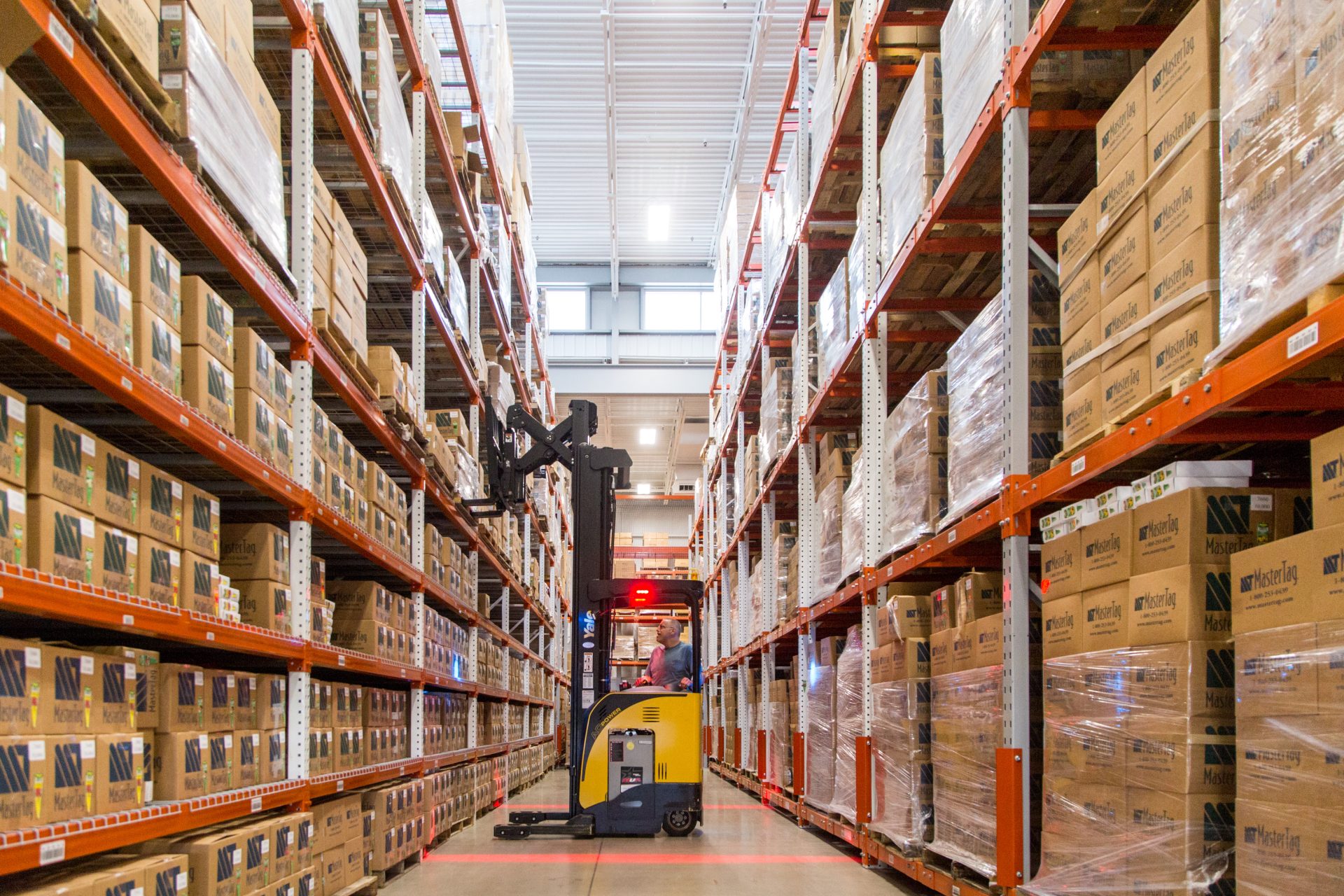
MasterTag’s peak season runs from January to mid-April, with fulfillment activity high across all four months. But it truly peaks during the second week of February.
“That’s going to stay hot and heavy for about a month or until the end of March,” says Jeff Stevens, Fulfillment Center Manager at MasterTag. “It happens every year like clockwork.”
That spike in orders means growers should plan ahead to make sure they receive their orders on time. How far ahead depends on a few different factors.
A Day in the Life During Peak Season at MasterTag
Understanding how MasterTag meets deadlines starts with understanding what happens behind the scenes. Here’s a breakdown of how a day in the warehouse during peak season typically looks:
- The inventory workers locate MasterTag’s just-in-time production runs and bring them to the Fulfillment Center.
- The inventory items needed for a particular day are placed on the shelf.
- Pick lists, or sheets that tell the warehouse workers exactly what to pull, are released.
- The pick list is picked and the order moves to packing.
- Shipping then takes the order and routes it out via USPS, UPS, FedEx, or truck freight.
“This all happens in a pretty compact time frame,” Stevens says. “The inventory team gets in around 5 a.m., and order fulfillment could wrap up anywhere between 3 and 5 p.m.”
Considering Turnaround Times
Most turnaround times depend on the grower’s own forecasting. MasterTag works closely with growers to understand what their inventory needs are ahead of time, so that when they’re ready to order, the lead time is much shorter.
“A lot of it is dependent on the collaboration that we have with customers earlier on in the season,” says Korey Minnebo, Senior Manager of Customer Service and Success at MasterTag. “Our prep work is understanding what the customer’s needs will be before orders start coming in.”
Turnaround times also shift based on order size and the type of tags needed—there’s no one-size-fits-all approach. Instead, MasterTag sets expectations early, so customers know what to expect on lead time and ship time. Some are more flexible, like the grower who works on a five-day lead time. Others are more strict, like the grower who needs tags within 48 hours.
Because that timeline is so tight, MasterTag leans heavily on upfront communication.
Making Tight Deadlines Work
Once an order is submitted, it works through the system quickly, which means changes become challenging almost immediately. That’s why the company emphasizes upfront conversations with customers.
“We have a lot of conversations with customers upfront about doing those double-checks and proofs to make sure they have the items right and the quantity right,” Minnebo says. “We’ll try to accommodate any changes we can, and we certainly do at some points, but sometimes we’ll be in a situation where we’re too far along in the process.”
Quality issues are rare, but when they happen, MasterTag gets creative. If part of an order is correct, the company will ship it in separate batches. This ensures customers get what they need, when they need it, rather than holding up the line for one fix.
How significant the change is comes into play here. If a grower wants to completely overhaul their original design, they’re back at square one—and on-time delivery is probably out of the question. But if they simply want to add an item onto their order or increase the number of tags they’re ordering, MasterTag can likely accommodate.
Prioritizing Orders
Sometimes deadlines are tight, sometimes they aren’t, and sometimes they fall on the same day. That raises an important question for MasterTag: Which order should it take on first?
Much like order times, it depends on a few different things. There are several variables at play: how new the items are, whether they’re already in stock, the size of the order, and whether the customer service and fulfillment center teams need to collaborate on the order.
“If they all have the same deadline, there’s going to be different elements to each of those orders,” Minnebo says. “What takes priority depends on how many pieces need to connect.”
As Stevens put it, the order fulfillment process is an orchestrated series of events that take place throughout the day. As long as the team gets what they need from production on time, they can keep everything on track. He credits his team for being dedicated, flexible, and focused especially during the peak period.
“If you take a look at our on-time delivery rate, we’re in a really good place,” Stevens says. “We’re always chasing it and looking for ways to improve the process.”
The mix of speed, communication, and flexibility is what keeps MasterTag’s on-time delivery rate high, even during the busiest time of the year. But as Stevens points out, “good” isn’t the finish line. The MasterTag team is always looking for ways to shave time, catch problems earlier, and make peak season as efficient as possible.


